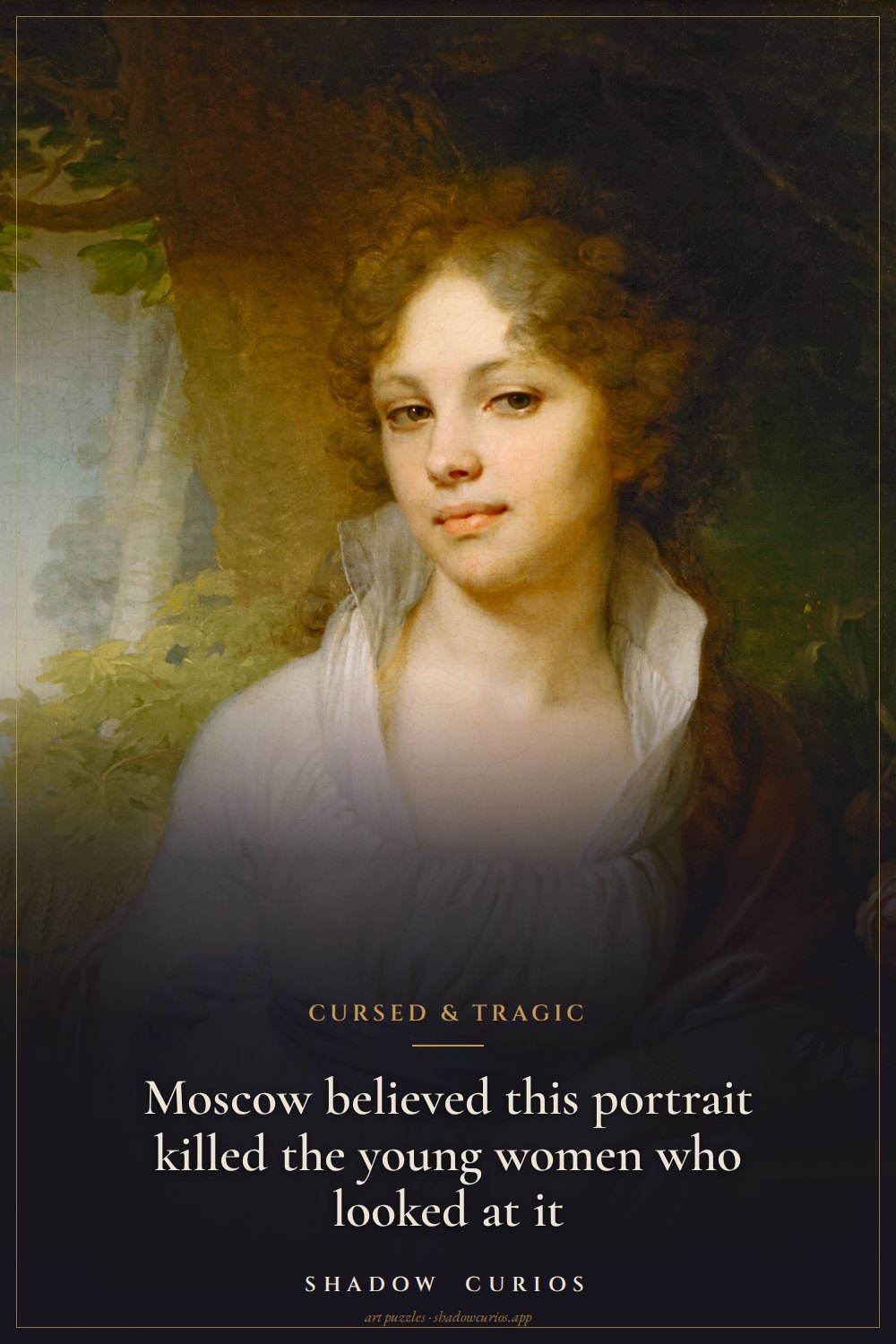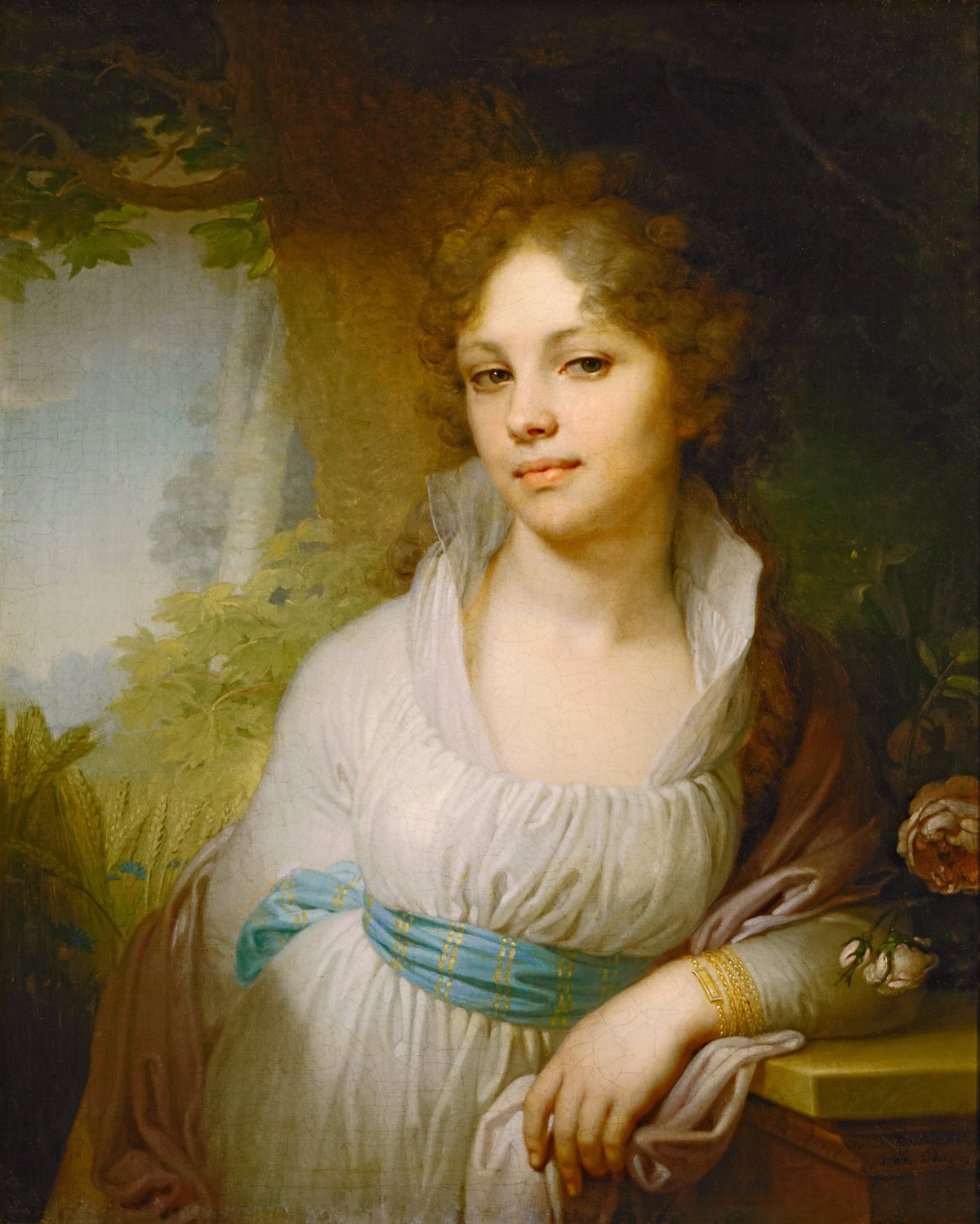
A wedding portrait
In 1797 Maria Ivanovna Tolstaya, eighteen years old and a daughter of one of Russia's great noble families, was married to Stepan Lopukhin, a court chamberlain ten years her senior. The match was arranged by their parents, and by most accounts it was not a happy one. To mark it, her husband commissioned a portrait from Vladimir Borovikovsky, the most fashionable portraitist in St Petersburg.
Borovikovsky gave the new bride everything the age admired. She wears the simple white muslin of the moment, a turquoise sash, a crimson shawl slipping from her shoulder. She leans on a stone ledge in a garden, with a birch, cornflowers and ripe wheat behind her, and a rose beside her that is already beginning to droop. Her head tilts. Her eyes are half lidded. She is smiling at something she does not intend to tell you.
Six years
Maria Lopukhina died in 1803, of consumption, at twenty-three. She left no children and almost no trace, except the portrait. And the portrait, as portraits of the dead do, began to change in the eyes of the people who looked at it. The drooping rose looked like a warning. The languid smile looked like something that knew.
The curse
Moscow gossip settled on her father, Count Ivan Tolstoy, a man said to be drawn to mysticism and the occult. The story went that after her death he lured his daughter's spirit into the canvas, and that it now waited there for company. Any young woman who stood too long before the portrait, people whispered, would sicken and follow her into the grave. Some tellings put the number of victims at ten. For decades, marriageable girls were kept away from it.
Tretyakov was not afraid
The portrait stayed in the family, passing to Maria's niece, who did not believe a word of it. In 1880 the great Moscow collector Pavel Tretyakov saw it at her home and bought it for his gallery, where it has hung ever since, in front of millions of visitors, young women among them.
The poet Yakov Polonsky, looking at it years later, wrote that time had taken away Maria's beauty and her soul, but that Borovikovsky had saved her. It is the kinder reading, and probably the truer one.
Still, look at her for a while. That half smile does not change. You might.