Midnight sittings
William Blake saw visions all his life. As a boy he saw a tree full of angels; as an old man he still spoke with the dead. Around 1819 he met John Varley, a painter and astrologer who believed in him completely, and the two began meeting late at night. Varley would name a spirit, and Blake would look into the dark and draw whoever came: kings, poets, villains, and at least once, a flea.
What the flea said
Varley wrote down what happened. As Blake drew, the ghost explained itself. Fleas, it said, are inhabited by the souls of men who were bloodthirsty to excess, and that is why they are kept so small. If a flea were the size of a horse, it would drain whole regions of the country of their blood. At one point the ghost opened its mouth, and Blake had to begin a separate drawing of it.
The painting
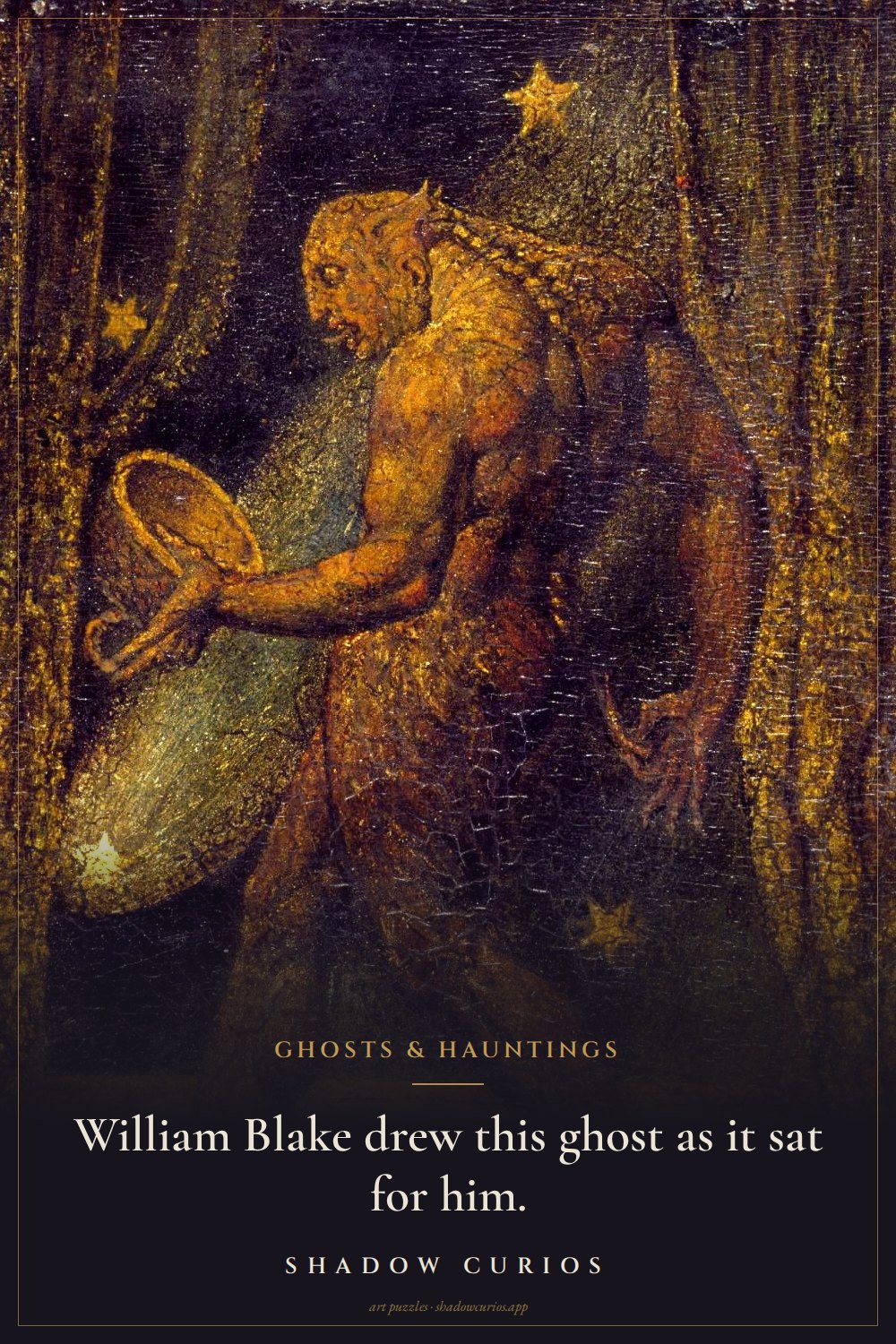
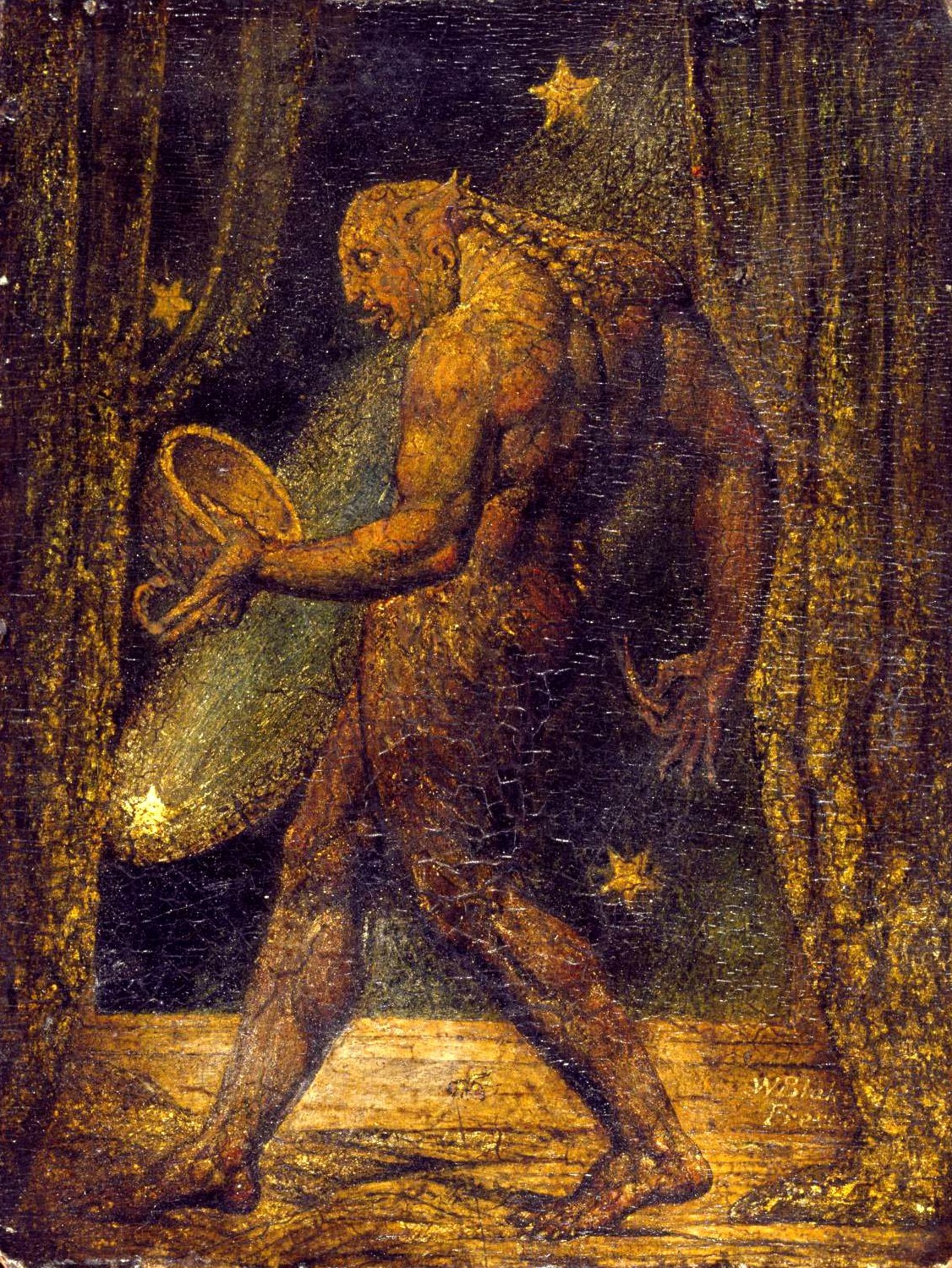
From that sketch Blake made this small, strange picture. The flea strides across a stage between drawn curtains like an actor making his entrance. He is muscled and scaly, his head tiny, his tongue flicking out. In his hands he carries a bowl, meant for blood. Behind him the stars shine and a comet streaks across the sky.
A crumbling ghost
Blake painted it on a mahogany panel smaller than a paperback, in his own experimental mix of glue-based paint and gold that he called “fresco.” The technique did not last. The paint has cracked and flaked across the whole surface, so that two centuries on, Blake’s ghost is slowly coming apart.
Believe it or not
Did Blake really see the flea? Varley never doubted it. Blake’s friends said he spoke of his visions as calmly as he spoke of his neighbours. The painting stayed with Varley and now hangs in Tate Britain, where it is one of the museum’s best-loved oddities.