The oldest ghost story
The tale is older than anyone can trace. Aesop told it in ancient Greece, and in 1668 the French poet Jean de La Fontaine made it famous as La Mort et le bûcheron. An old woodcutter, bent double under his load of sticks, sets it down and curses his life: the cold, the hunger, the taxes, the endless work. He calls on Death to come and take him.
Death comes, and asks what he wants. The old man looks at him and answers: only a little help getting this bundle back onto my shoulders. La Fontaine’s moral is plain. We would rather suffer than die.
Legros’s Death
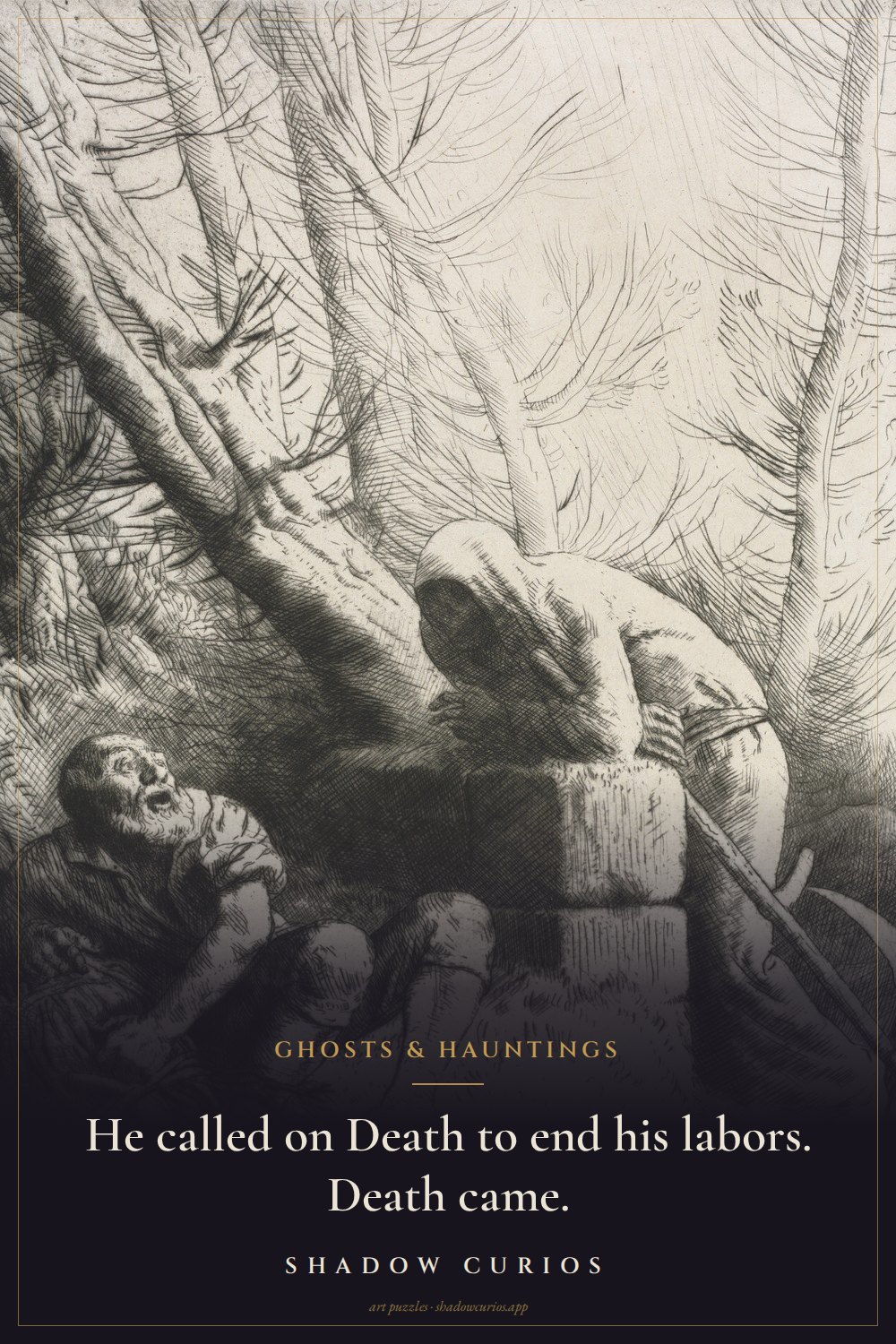
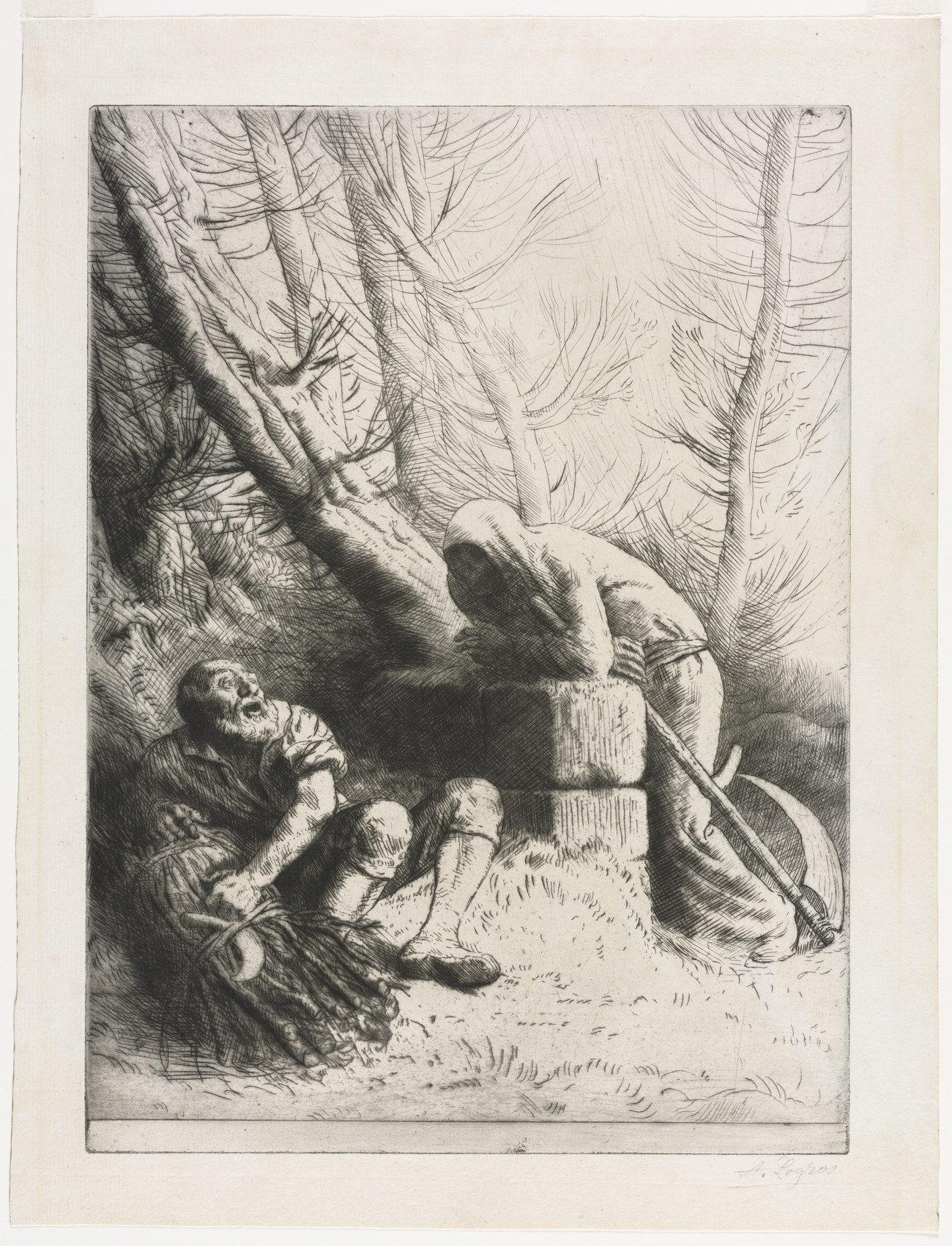
Alphonse Legros (1837–1911) was born in Dijon, moved to London in his twenties, and became one of the most influential teachers of art in England. He returned to this fable again and again. His Death is not a grinning skeleton. It is a hooded, faceless shape that has simply sat down beside the woodcutter on a block of stone, its scythe propped at its side, as calm as a neighbour who has been expecting the visit.
Second thoughts
Look at the woodcutter. He has thrown himself back against the tree, mouth open, hands clutched to his chest. Legros caught the exact moment the old man realises that his wish has been granted.
Black and white
Legros drew with a needle on the copper plate, and every shadow here is made of lines: dense cross-hatching for the dark hood and the woodcutter’s coat, loose, sweeping strokes for the bare trees. This impression is signed in pencil, in Legros’s hand, below the plate.