A sensation
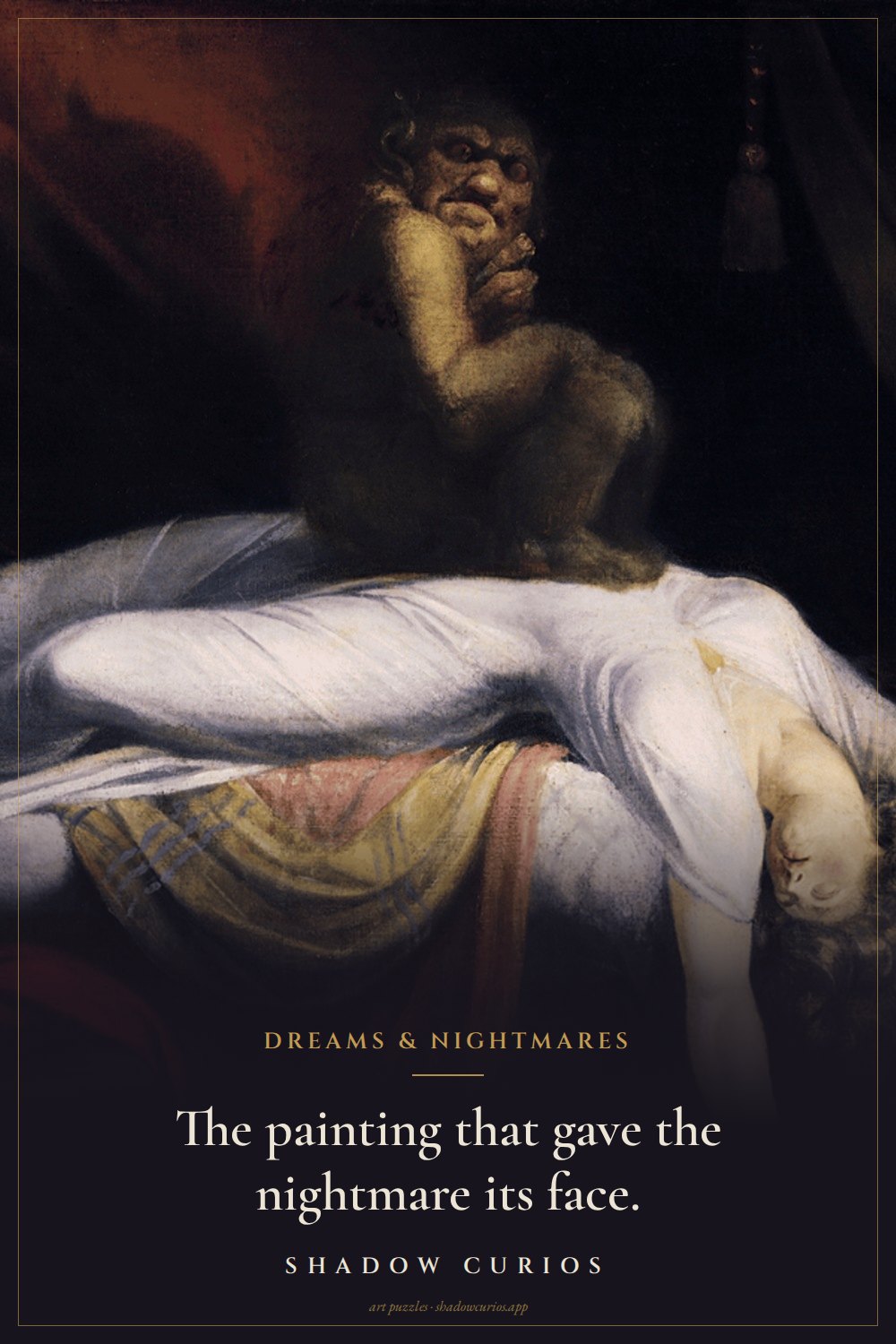
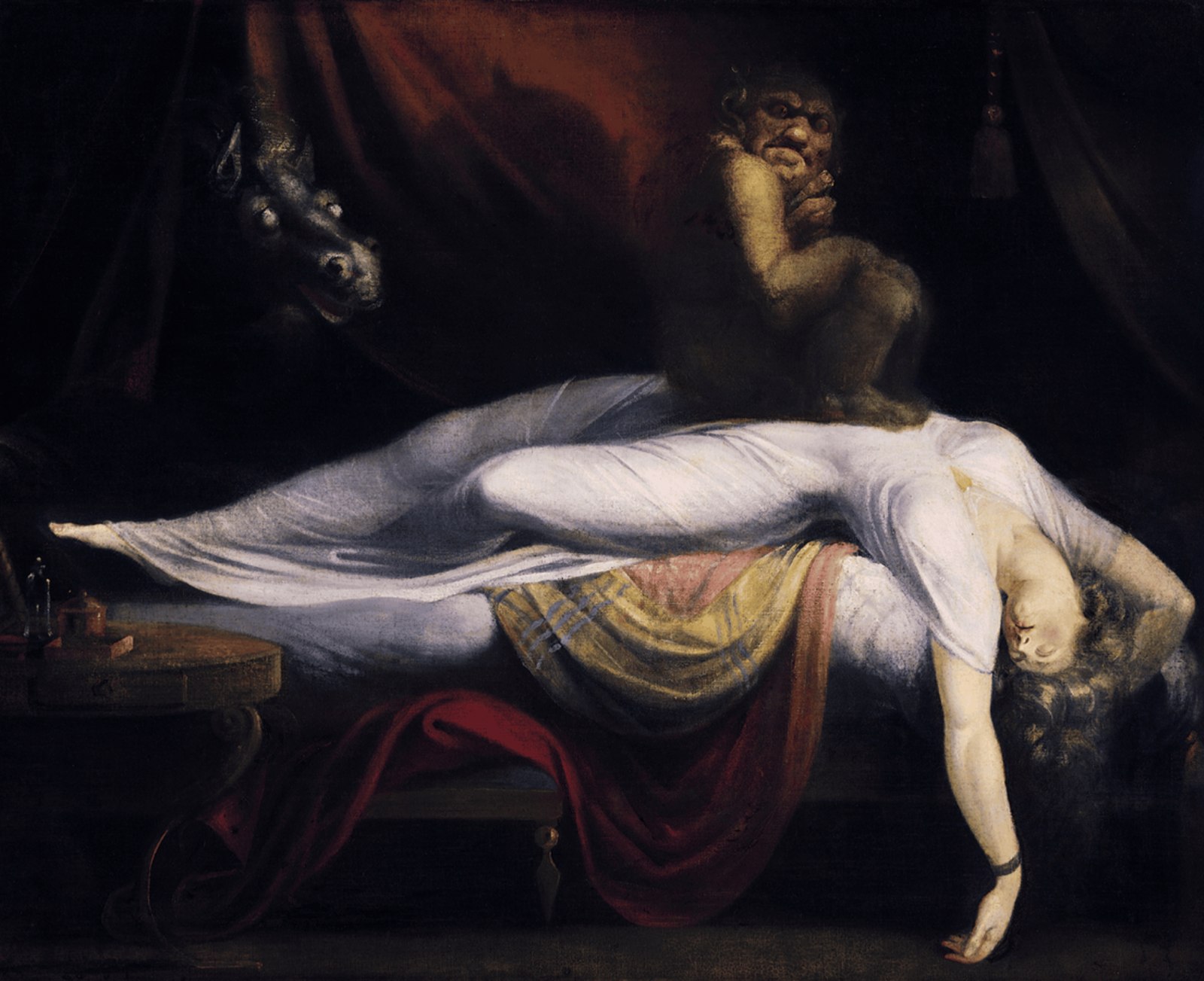
When The Nightmare went on show at the Royal Academy in London in 1782, crowds pushed to see it. Nobody had painted a dream like this before: not a vision of heaven or a moral allegory, but the thing itself, the terror of waking in the dark unable to move. Prints of it sold across Europe, and it made its Swiss-born painter, Henry Fuseli, famous overnight.
The weight on the chest
Old English had a word for the evil spirit that sat on sleepers and pressed the breath out of them: a mare. That is where our “nightmare” comes from. It has nothing to do with horses, but Fuseli could not resist the pun, so the mare pushes her head through the curtain as the demon squats on the sleeper’s chest. Many people who have woken paralysed and sure that something was in the room with them recognise the picture at once. Doctors now call it sleep paralysis. Fuseli painted it as it feels.
The woman on the back
Turn the canvas around and there is another painting: an unfinished portrait of a young woman. She is thought to be Anna Landolt, whom Fuseli fell in love with in Zurich a few years earlier. He wanted to marry her; her family would not hear of it, and she married someone else. Whatever the sleeper in white means, Fuseli painted her on the back of a woman he could not have.
The picture that travelled
A print of The Nightmare is said to have hung in Sigmund Freud’s apartment in Vienna. Mary Shelley knew the image well: her mother, Mary Wollstonecraft, had once been infatuated with Fuseli. When Victor Frankenstein finds his bride murdered on her wedding night, she lies flung across the bed just like Fuseli’s sleeper.
Again and again
Fuseli never really let the subject go. He painted several more versions of The Nightmare over the following years, and the demon, the horse and the helpless sleeper have been borrowed by painters, cartoonists and filmmakers ever since.