“Fairy” Fitzgerald
John Anster Fitzgerald (1819–1906) never went to art school. The son of a minor poet, he taught himself to paint and spent most of a long career on one subject: the small, strange beings of the fairy world. He was known as “Fairy” Fitzgerald. Today his pictures are among the most sought after of all Victorian fairy paintings.
The dream pictures
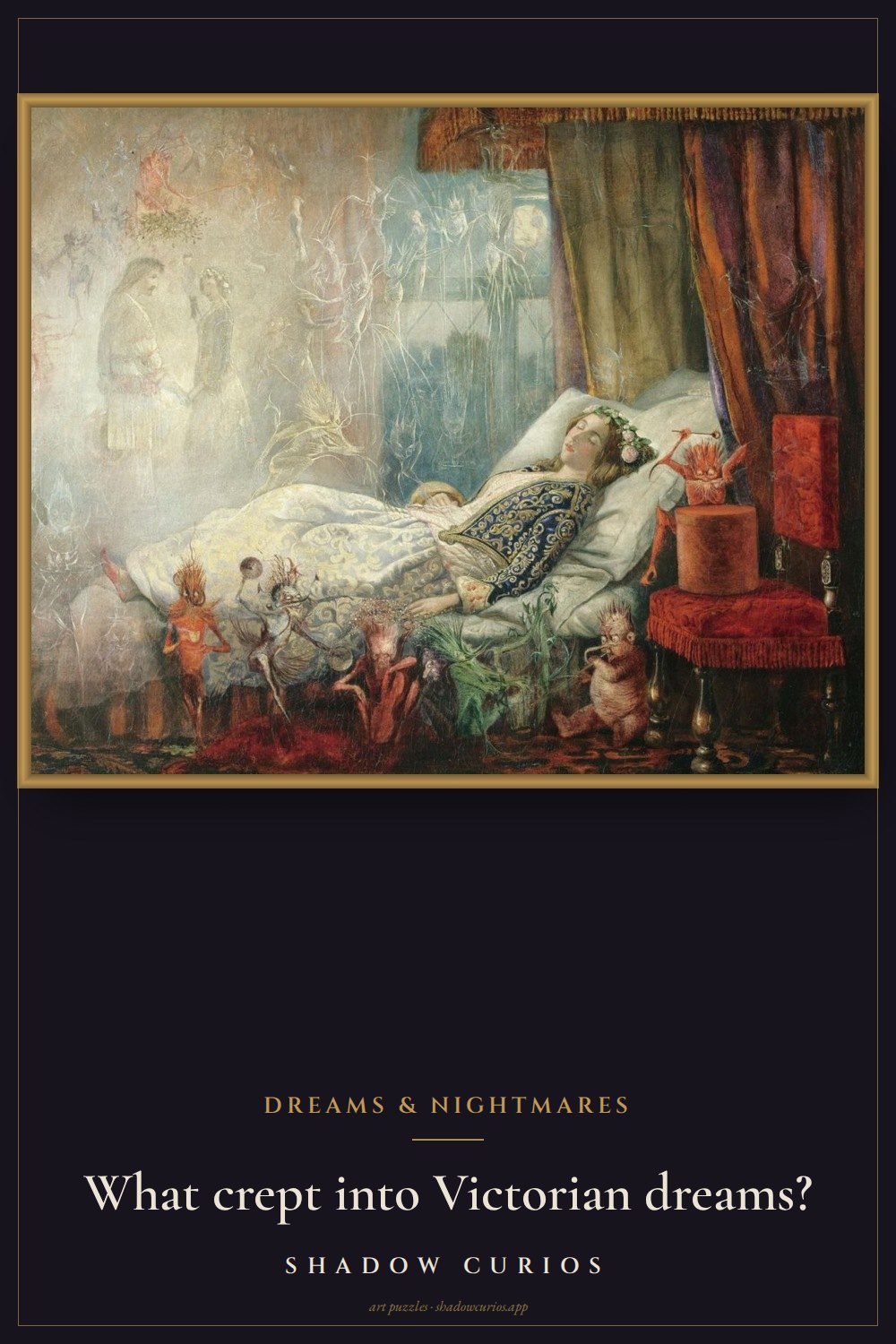
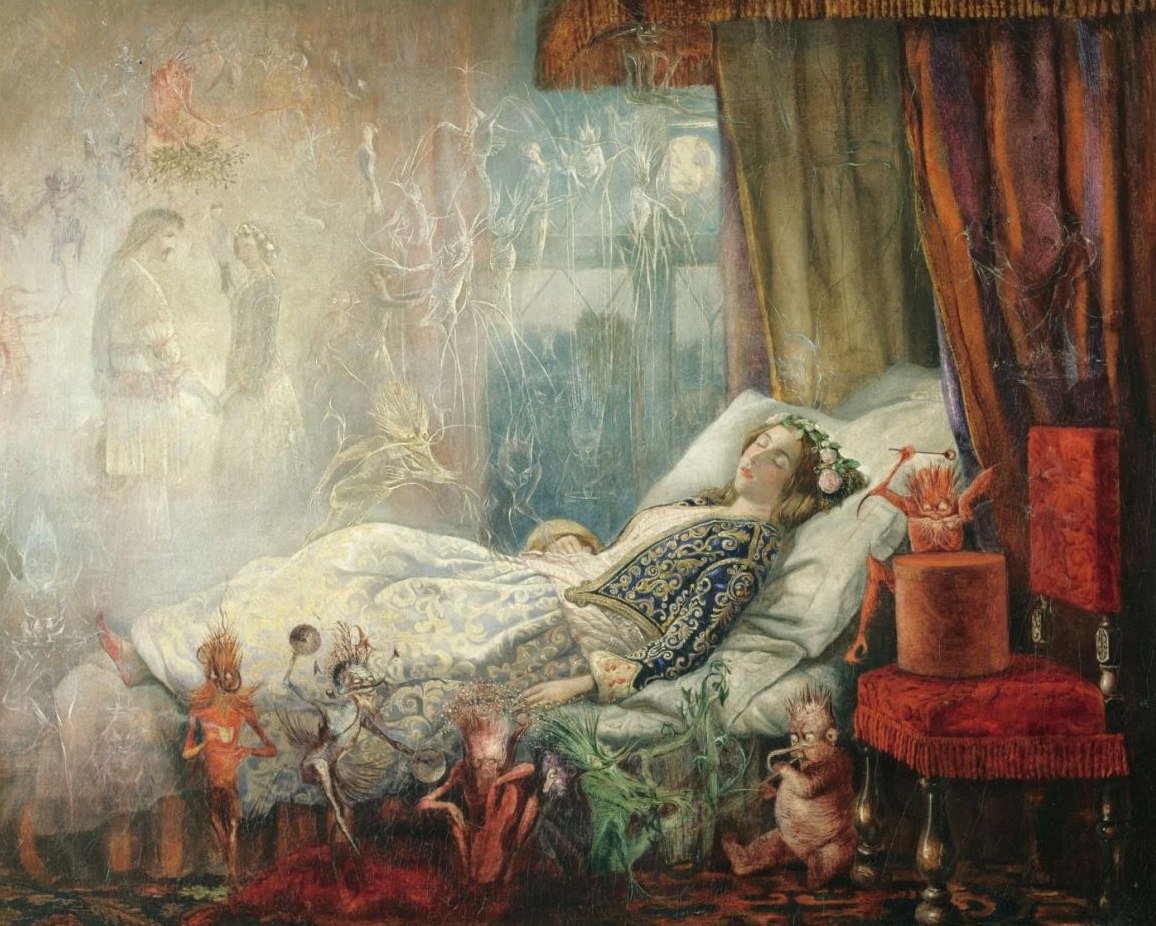
His best-known works are a series of dream pictures, painted around 1856 to 1860. In each one somebody sleeps, and the room fills with the things that come out when they do. The title of this one comes from Shakespeare’s The Tempest: “We are such stuff as dreams are made on.”
A girl lies asleep with a garland of roses in her hair. On the left, in a pale mist of wings and tendrils, floats what she is dreaming of: a bride and groom. At the foot of the bed the other visitors have arrived. Spiky red creatures scramble over the covers, something plump sits on the floor blowing a pipe, and a grinning imp has climbed onto a hatbox on the chair. None of them seems in any hurry to leave.
What was he taking?
Victorian London ran on laudanum, a tincture of opium sold at any chemist’s. Critics have long wondered whether Fitzgerald’s swarming, hallucinatory rooms owe something to it. There is no evidence that he used it, and he lived to eighty-seven. But the paintings certainly look like the dreams people described.
Sweet dream or nightmare?
That is the question the painting leaves open. The girl looks peaceful, and her dream of a wedding is lovely. It is everything else in the room that is wrong. Fitzgerald kept coming back to the same idea: the sleeper sees only the dream, and never what has gathered around the bed.